Well, we made it – It’s August first, 2025! We are nearing the final quarter of the year and although we’ve been on the road since late June, August is the first month on the calendar to begin since we’ve committed to 100% boondocking.
You can spend tens of thousands of dollars in universities learning a maxim attributed to Peter Drucker. You could instead opt to simply read it here: “If You Can’t Measure It, You Can’t Manage It”. (I memorized it as “you cannot manage what you don’t measure.”) There are of course opposing schools of thought, particularly as revolves around how one might measure human performance. For our purposes we’re agreeing the premise is true when applied within the context of consumable goods on the road. It may seem like a thought exercise in the obvious but let’s take a step back and review a short list for a moment and see how quickly the items are extrapolated and intertwined.
- Water – Water requirements vary by species, age, size, and activity level. For humans, the general recommendation is about 15.5 cups (3.7 liters) for men and 11.5 cups (2.7 liters) for women daily. We need water to properly hydrate myself and Cleopatra AND we need water for bathing, washing dishes, and any of a hundred other universal functions water provides.
- Our Brinkley I-265 leaves port with the 55 gallon freshwater tank overflowing, having taken in city water through our local filter.
- Dependent upon distance travelled and elevation changes some portion of this 55 gallons will “siphon off”, or spill over the top of the tank through safety valves – this is intended to prevent manic shifts in weight while pulling the trailer. [55 gallons of water weighs approximately 460 to 500 pounds (209 to 227 kilograms) depending on the temperature and density of the water.]
- Secondary to fresh water are our two gray water tanks and black tank. A separate 40 gallon tank is present for the galley [cooking, washing dishes] and the head [bathing and sink drainage]. The black tank, which holds human waste, is 40 gallons.
- Food – Appropriate caloric intake based on healthy, unprocessed foods is preferable. We of course have our “self-stable rations” socked away while we make a point to visit a local market every 14 days or less to reprovision, also impacted by food spoilage and/or expiration dates.
- The conjunction of Water and Food: It’s worth pointing out that depetion of either resource while boondocking is likely to bring that session to a close. Exhausting grey/black tank capacity can have the same effect.
- Unscheduled road travel leads to additional cash expenditures including pump/dump for the trailer, or unplanned overnight stays.
- Fuel – Gasoline in truck to travel, gasoline/propane for backup generator(s) to create electricity, propane to heat the trailer and provide hot water.
- Electricity – Perhaps a bit of a misnomer as we don’t “bring” electricity with us beyond what is stored in our battery pile, so much as the ability to generate it in various forms. Beyond the obvious need for lights at night we need consistent electricity to power our 12-volt refrigerator(s) 24/7/365. Did you notice that conjuction with food happen all over again? A fair number of electric-powered devices in our trailer fall squarely within the world of convenience more than necessity such as television, entertainment, etc. Some others are non-negotiable.
- Dependent upon weather conditions and indoor temperatures in the Doghouse, another absolutely essential service propped up by electricity is air conditioning. I can swelter in front of a fan but Cleopatra is wearing her fur coat at all times, and high temperatures are physically dangerous for her. My hard and fast rule (with push alarms) is an internal temperature beyond 83 degrees Farenheit before 17:30 hours requires closing up windows and applying air conditioning.
- Internet – yes we need our cat memes and videos, but Starlink in our case is often our absolute lifeline to the outside world. We leave blacktop trekking into deep wilds that have never even smelled cellular coverage. [Solid Internet is already a secondary priority for communication while also providing WiFi calling, as well as a tertiery priority for tracking weather and potential inbound hazards.]
- Refuse – In addition to converting fresh water into grey water when used, we generate recycleables, trash, and garbage. Each of these must be stored somewhere until we return to blacktop to be disposed of properly. Are there bears or other wildlife in the area that require we store this securely?
Today Cleopatra and I journeyed across the state line into Nevada and fetched FIVE Amazon deliveries from the 7-Eleven lockers off West McCarren, then continued East past Mustang into what claimed to be the largest industrial part in the world. We were visiting Tire Rack, as they had the best price anywhere on a combined steel wheel and Hankook Vantra tire to match the five we already have on the trailer. With four wheels and a spare, this is my “second/extra” spare tire. Let’s face it, a two-axle trailer has a coin-toss chance of losing both tires on one side to a blowout or road hazard. Rolling with only one spare is a recipie for sitting on the side of the road, perhaps overnight where we travel, before “help” arrives.
Just yesterday we made the trek into Reno proper to visit the 7-Eleven Amazon lockers and then moved on to Harbor Freight. I had been planning on purchasing the rugged 3-ton off-road jack, hoping of course to never actually need it. Just a few weeks prior I had wondered to myself where I might purchase a “Handyman” jack, more commonly referred to as a “Farm Jack” these days… and low, behold, there’s exactly ONE on the shelf in this store. Swipe – bonus purchase. I also fetched the appropriate charger for the 20-amp battery in the Hercules impact wrench I’d already purchased, along with hardened sockets for both truck and trailer. Adding these jacks to our toolkit closes the loop on a desire for self-sufficiency and peace of mind while on the road full time.
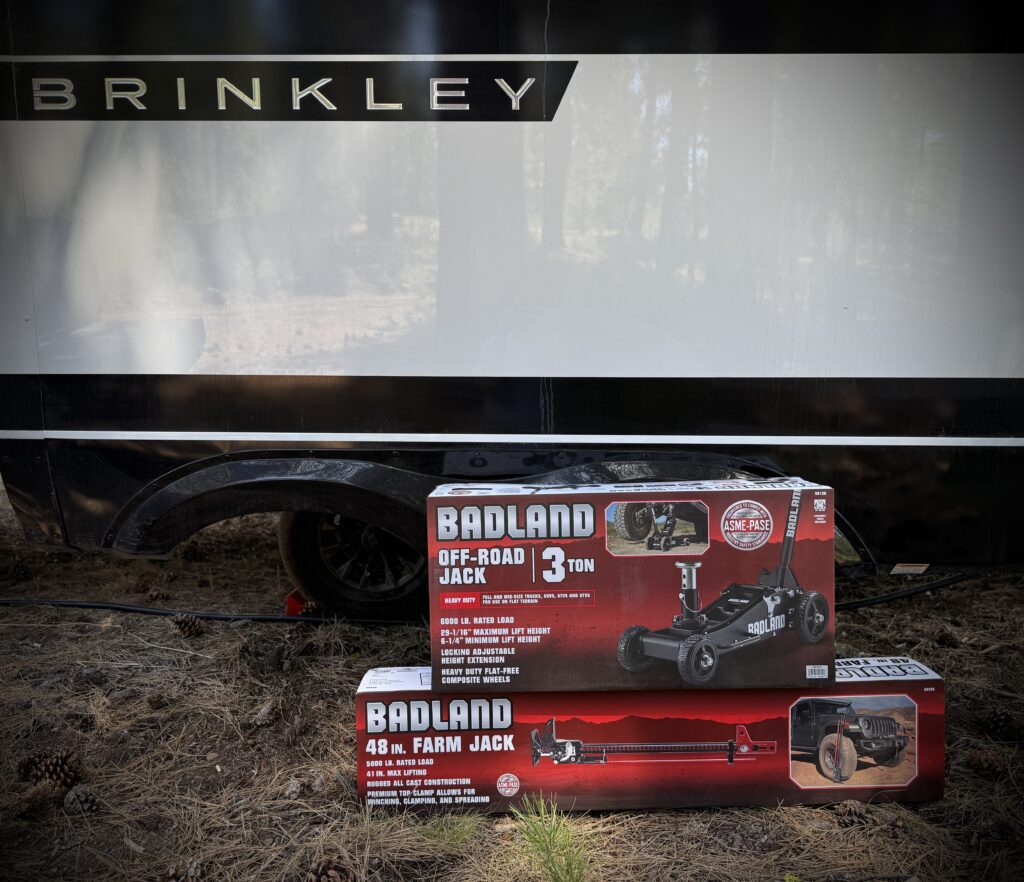
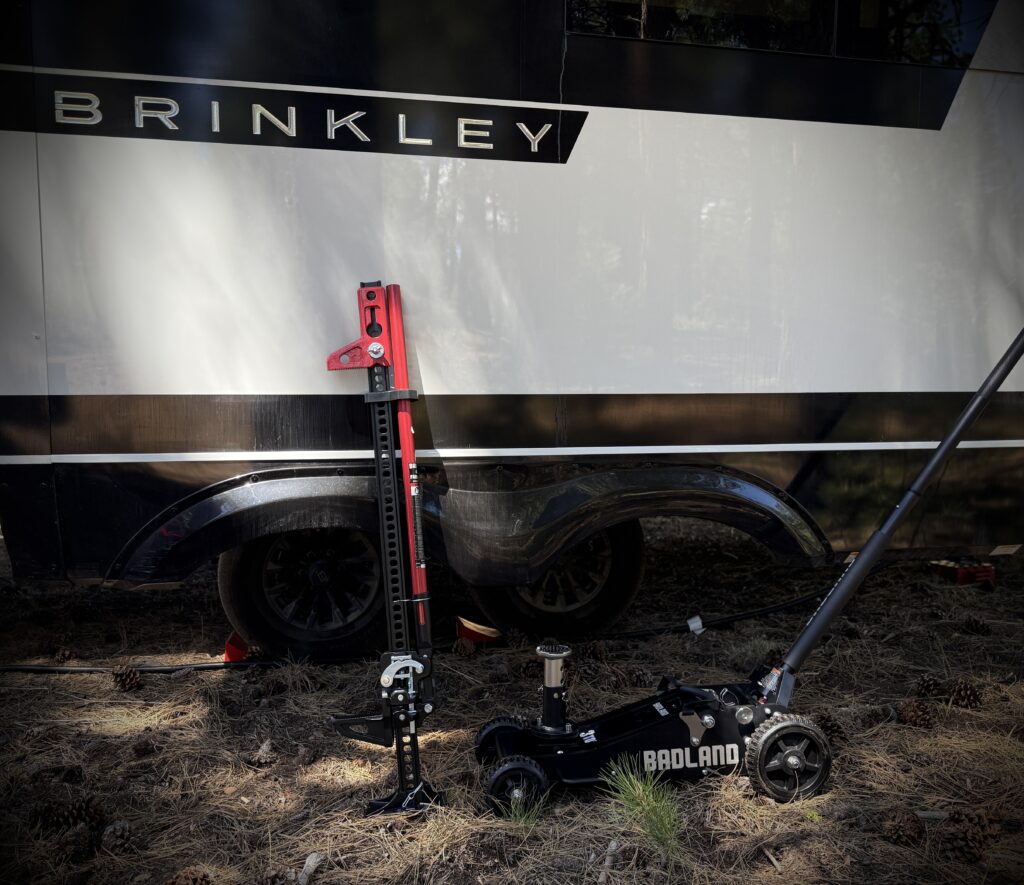
I’m fairly averse to making unnecessary or repetitive trips from boondocking locations back to blacktop and beyond; I try to ensure every trip serves multiple purposes and the time/gas is a good investment. Truck time is also taking away from adventure time for Cleopatra so I just don’t want a lot of it. This week, however, I made concessions. On the fringe of my thinking was the reminder that August was approaching fast – so we made a grocery run, filled our gasoline containers and daily driver, and had a pair of twenty-pound propane cylinders refilled, keeping receipts and volumes for our month-long reporting adventure.
My primary reason for tolerating several trips this week revolved around electricity. Our ability to “generate” electricity locally is provided by our primary generator, a Predator 5000 dual-fuel inverter, and our backup generator, a Predator 3500 gasoline inverter. We also have a 50 Amp Inverter Generator Parallel Kit providing us with a 50-amp plug for our shore-power connection.
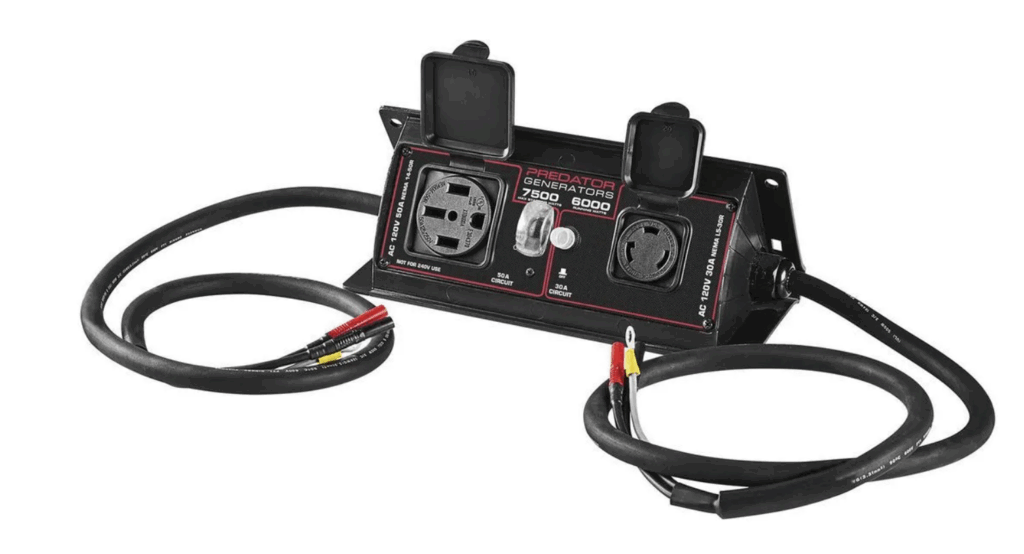
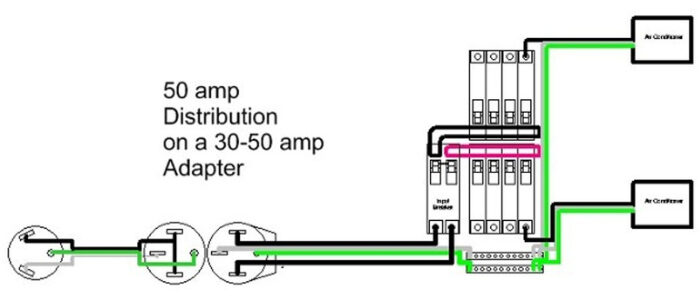
Our trailer expects a pair of 120V “hot” feeds to combine into 240V as seen in X (black) and Y (red) in the 14-50R wiring diagram below.
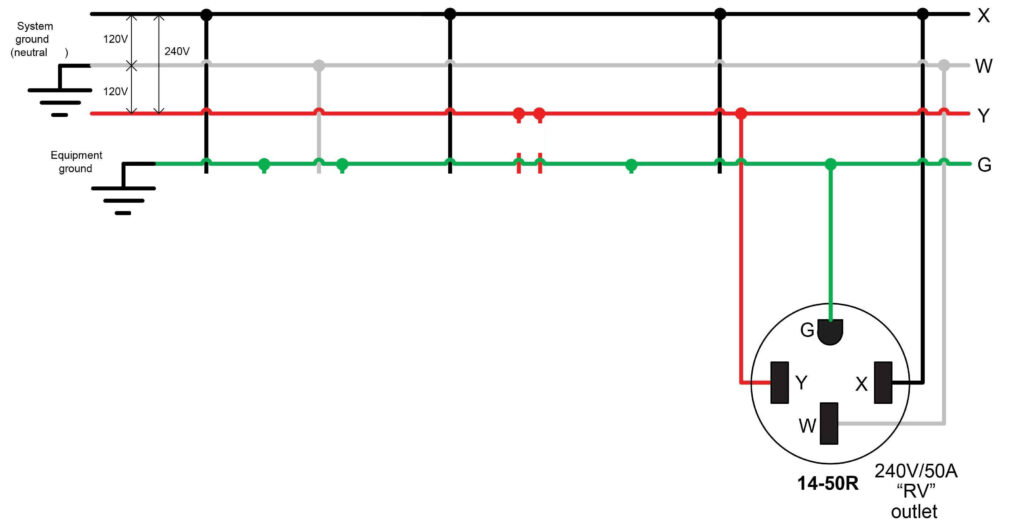
Restricted to 120V the parallel kit delivers a maximum of 5500 watts to the plug. In a pinch we can combine generators and operate BOTH air conditioning units directly from dinosaur bones. If we later turn an A/C off, we can also power down the second generator without altering the 120V output to the plug. That can be handy in some situations, the caveat being never demand more than you’re generating in those (or any) circumstances.
So the multi-trip week… yeah, about that. August approaching, again, just ideas in the aether to some degree, but we need our solar rig finished and we need it NOW! Over the past 45 or more days I’ve been purchasing and receiving the heavy-lift components required to decrease and/or eliminate our dependence on expensive, noisy, dirty fossil fuels while boondocking. Our Brinkley has its own Renogy 12-volt 200Ah lithium-ion battery and a 3000-watt pure sinewave inverter, coupled to a 200-watt solar panel mounted on the roof. It’s dinky but it keeps the refrigerator running in transit and provides 12-volt lighting. We treat it in our design like an island – we don’t mess with it yet, although that battery is huge and needs to move out of mid-bay storage.
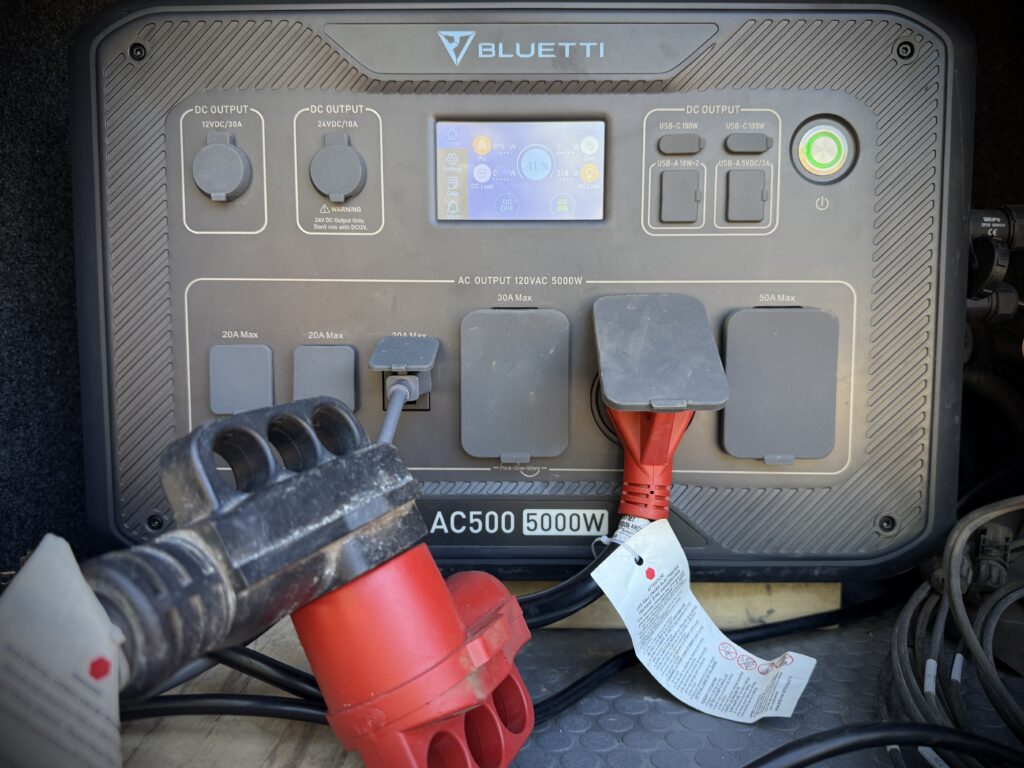
The heart of our self-sufficiency in terms of electricity is the Bluetti AC500 Powerstation and two B300K expansion batteries providing a current storage capacity of 5,529.6Wh. I originally selected this unit because it has a 50-amp 14-50R output plug while competing products topped out with a NEMA TT-30 three-prong plug at 30-amps. Once again the 120/240V monster growls, because in order to obtain Split Phase Bonding at 240V we would need a SECOND AC500. This is not only cost prohibitive it’s a 24″x12″x14″ box weighing an additional 66 pounds, requiring a minimum of one B300K battery which is also 20″x12″8.25″ and 65 pounds. At present the AC500 and two batteries adds roughly two hundred pounds to our towing weight. With two additional batteries shipping this week that’s a total of 320 pounds!
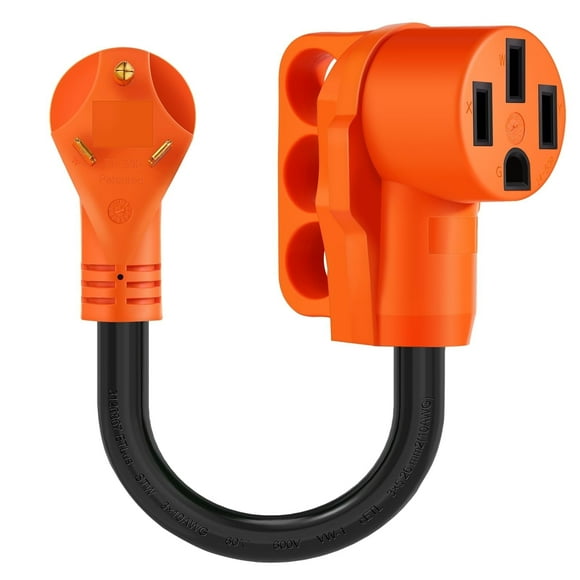
We treat the AC500 as a direct replacment for shore power. We employ a 30 amp male to 50 amp female “Dogbone” adapter to connect our 50 amp shore power cable to the 30 amp output. When “AC” power is enabled all AC ports on the front of the AC500 are fed – we keep our Starlink on a 20 amp circuit by itself and allow the 30 amp output to service the trailer.
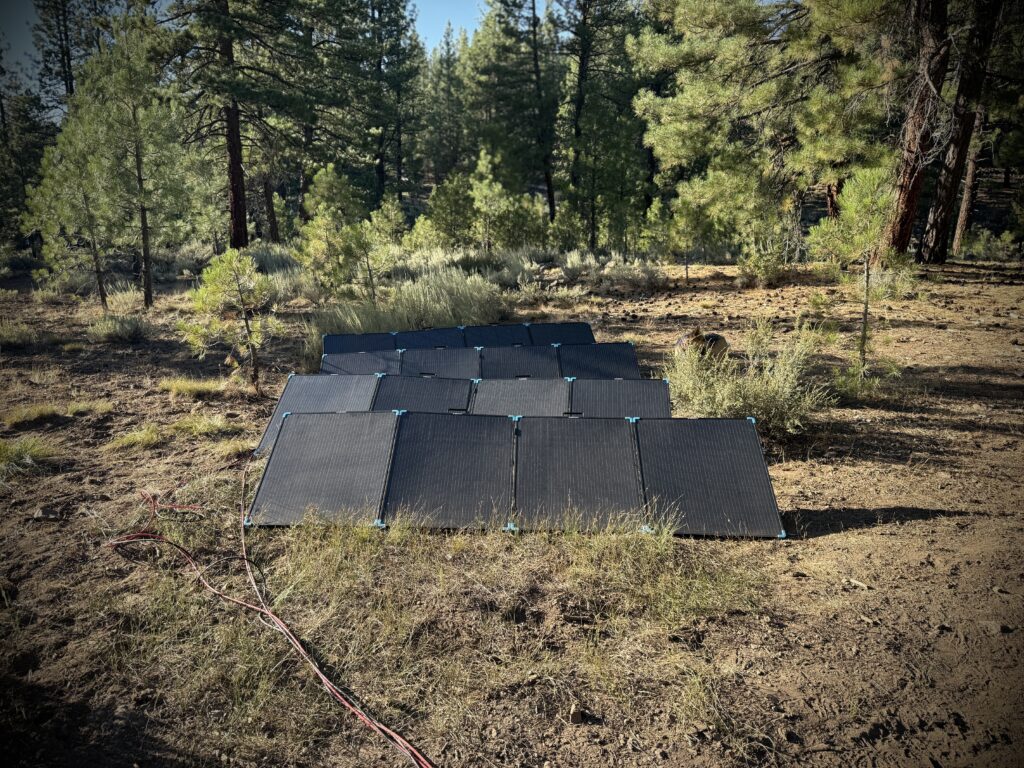
If the AC500 is the heart of our electrical operations then our Renogy solar suitcases would have to be the blood. We purchased four of these ground-deployed units that provide 400 watts each of photovoltaic generation capacity. That’s 1.6Kw for those who like those “K” values. We’ve been limping along with them in a series configuration awaiting delivery of some 10AWG cabling and parallel splitters. Now that they’ve arrived we’re operating two distinct array loops, 800 watts each, achieving the better part of 1.1Kw of charging power for eight or more hours of daylight, weather dependent.
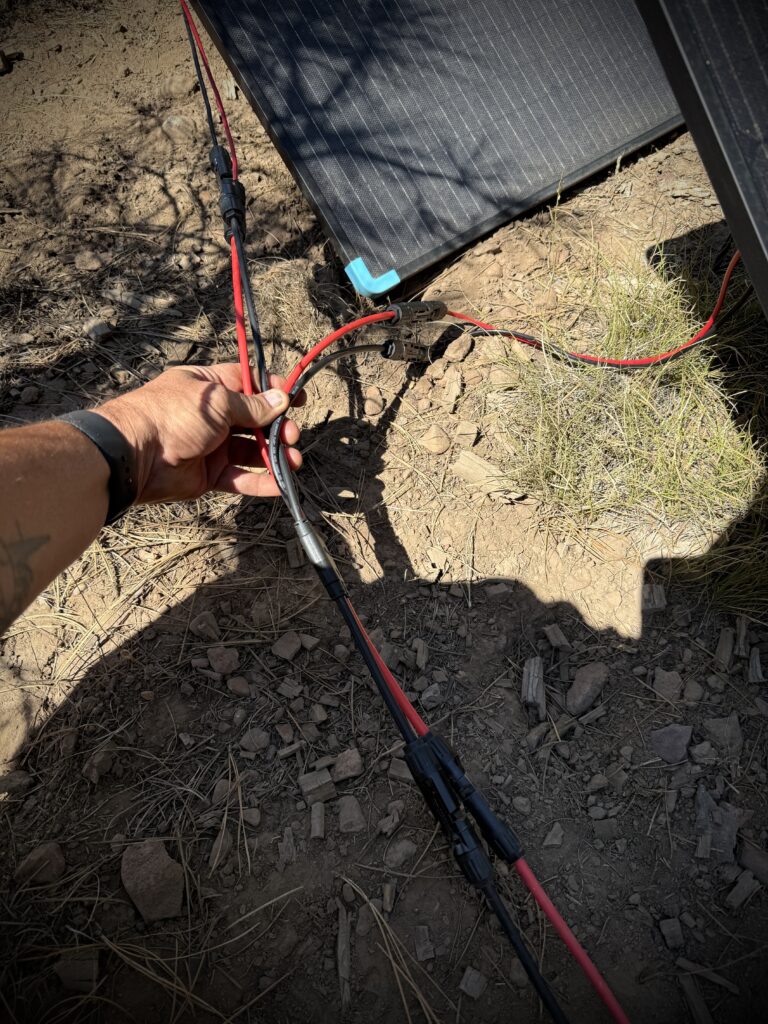
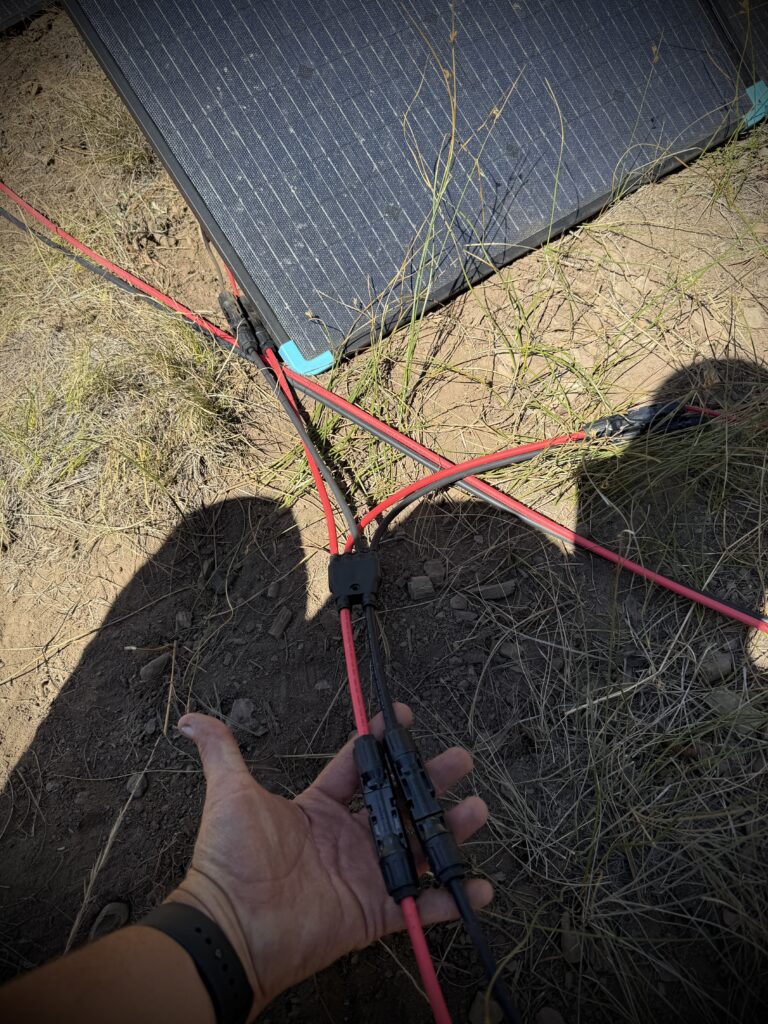
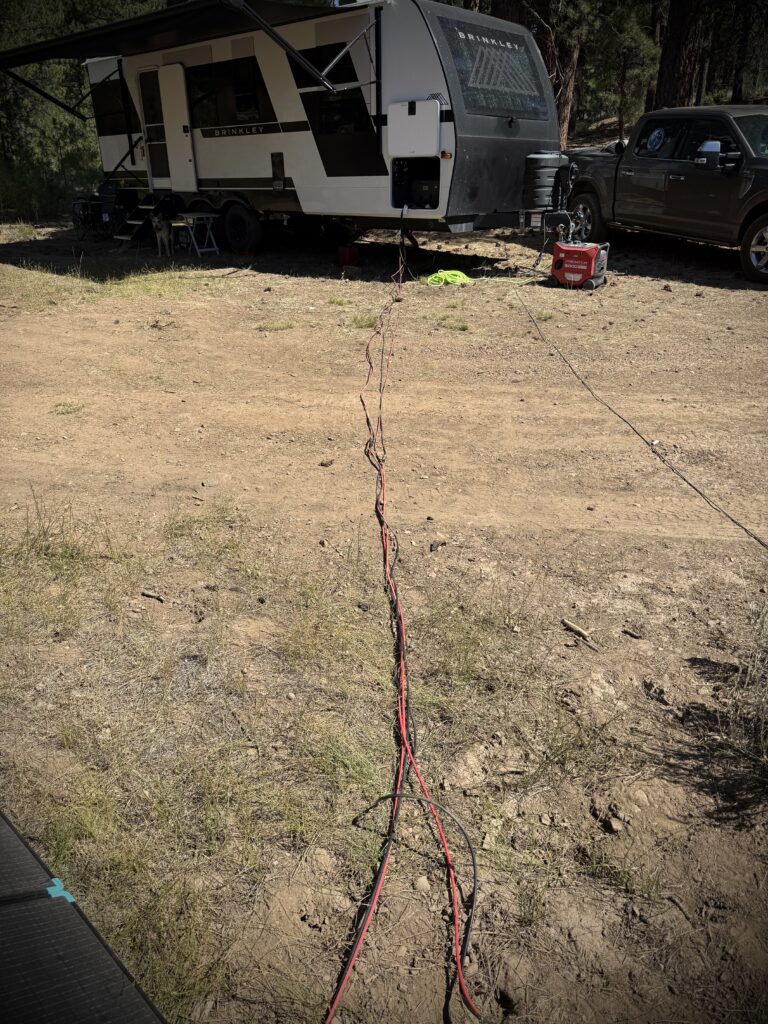
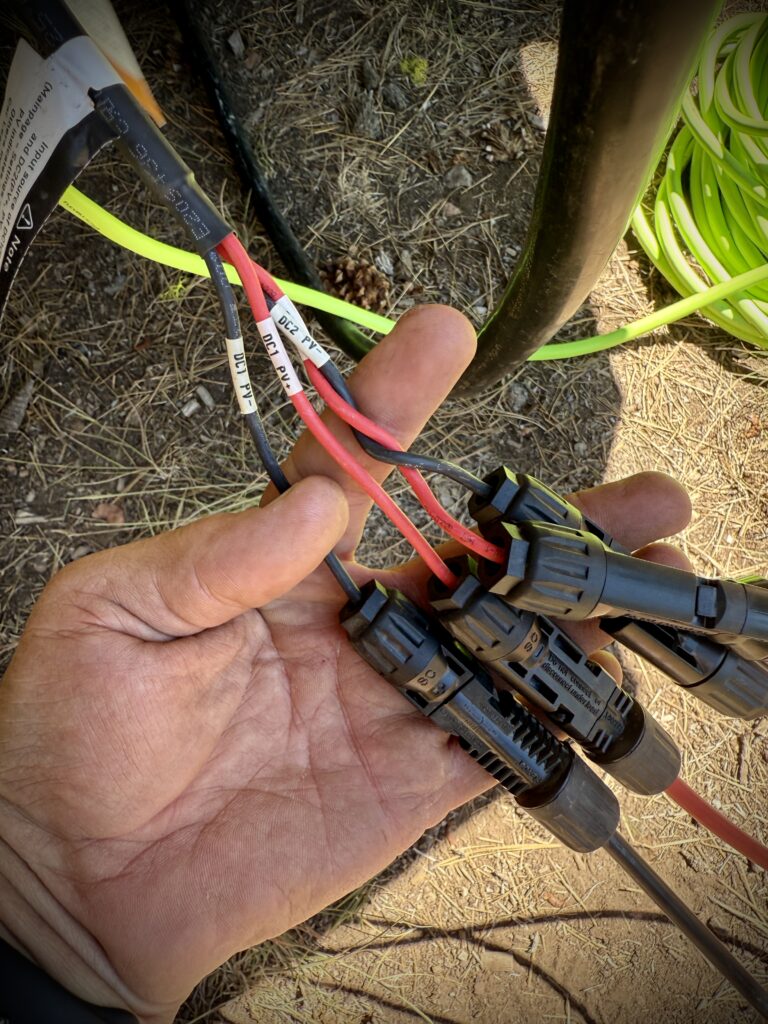
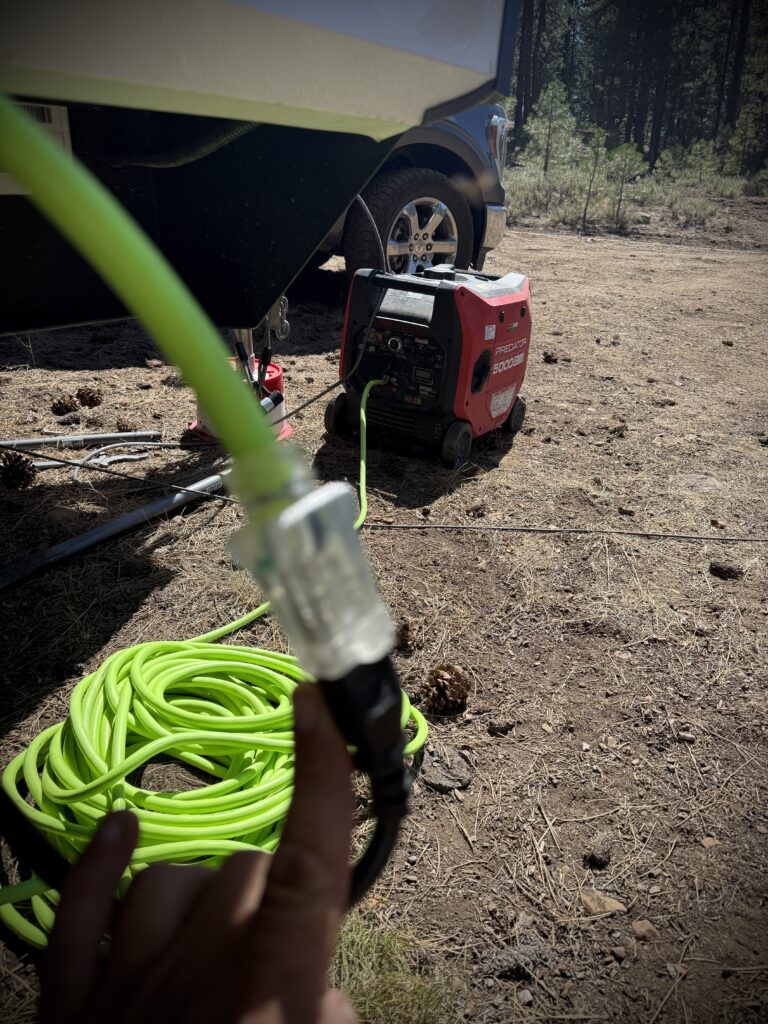
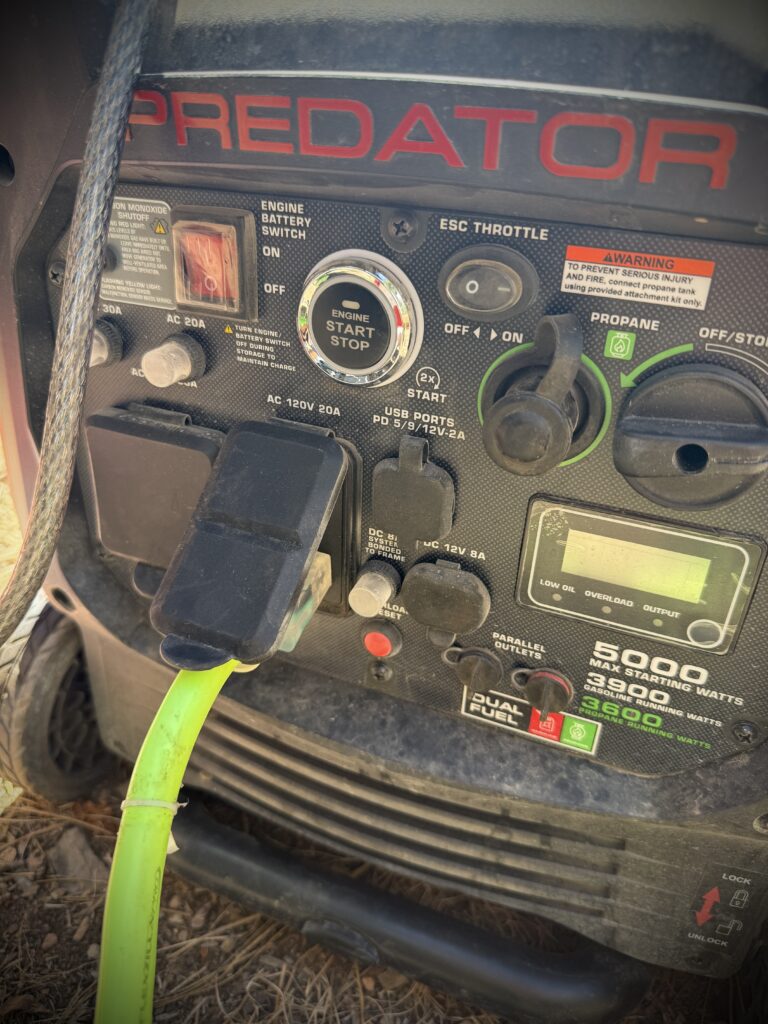
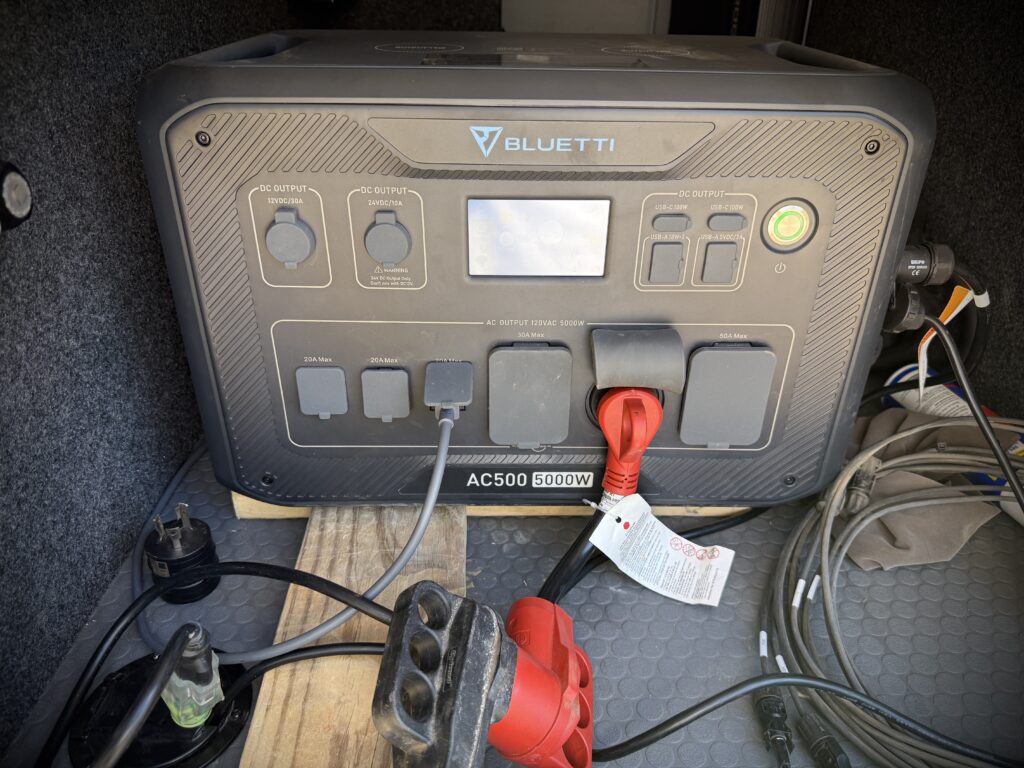
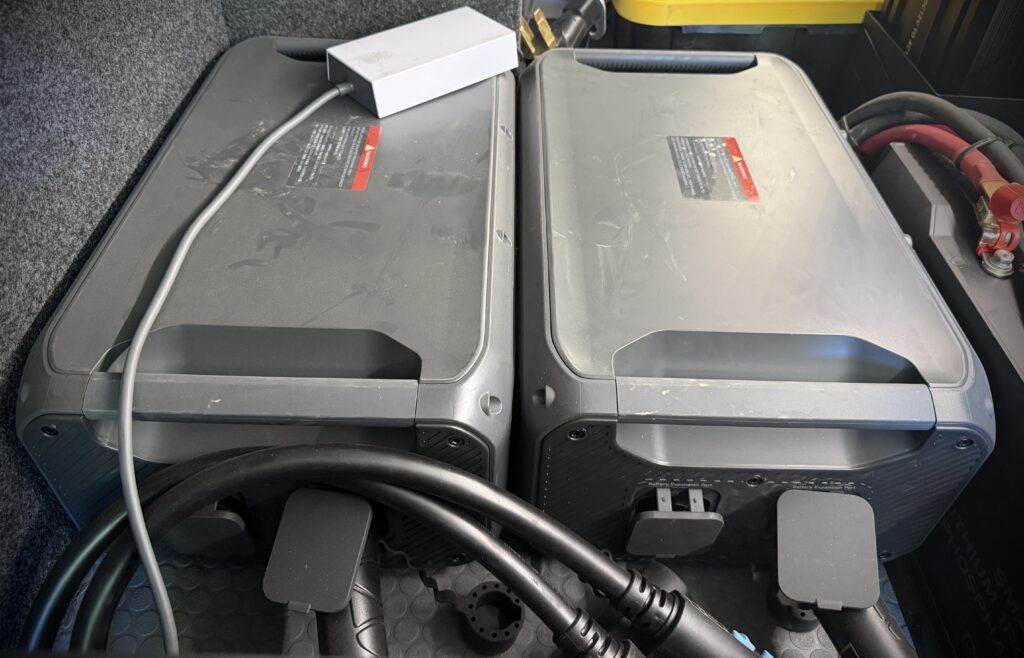
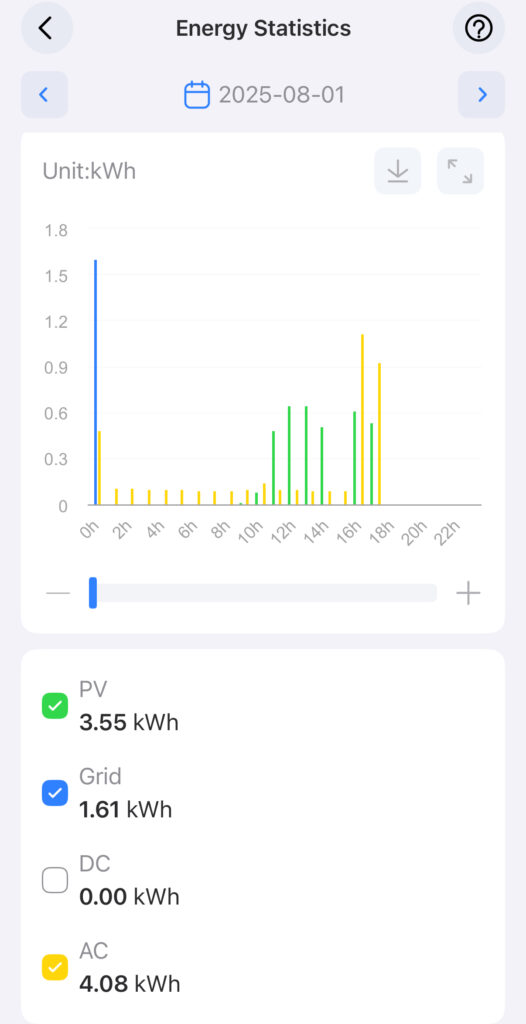
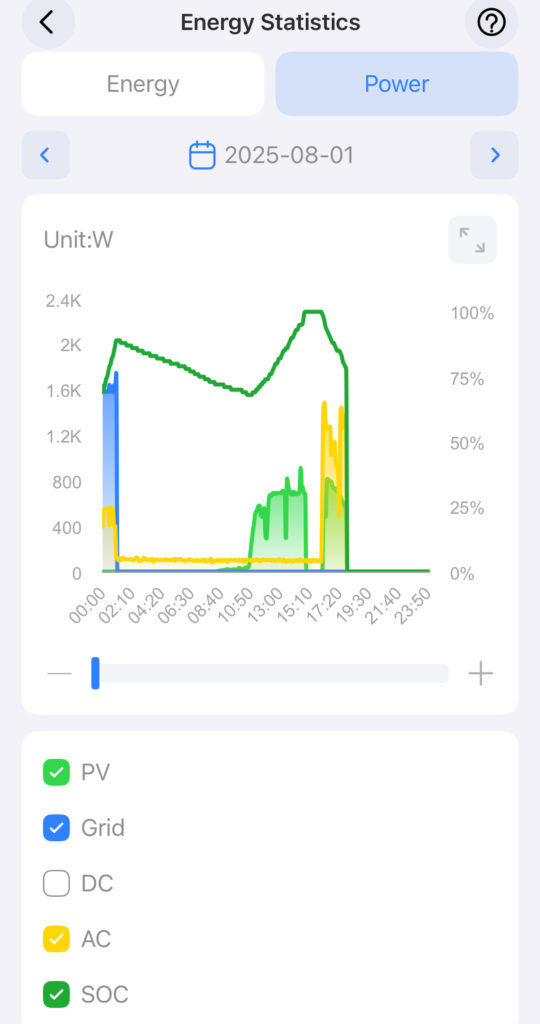
As previously mentioned the AC500 is our PRIMARY power source, and our Renogy solar suitcases are our PRIMARY generation source. It’s inevitable that weather and other factors will diminish our generation capacity while increasing our consumption, especially high heat requiring A/C. Thus the Predator generator(s) are the “backup”.
We’ve tested and tinkered with a handful of configurations. We can drive the shore power input directly from the generators on the parallel 50 amp connection, which in triple-digit temperatures will power both A/C units, and plug the charging cable for the AC500 into a local GFCI outlet to achieve a maximum of 15 amps charging. This charging limitation is specific to the charge cable that shipped with the unit. What I’ve settled on for the time being with the addition of the solar panels is to plug the AC500 charging cable directly into a 20 amp circuit on the Predator 5000. Bluetti offers a 30 amp charge cable that I can plug directly into the NEMA port on the generator to increase our efficency, charge faster, and reduce waste.
There will be weekly iterations of improvements. It’s a constant process.
| Scoring/Ratings | $2000 | |
| Innovation (1-5): Uniqueness and creativity of the experience or product. | Original purchase point was 50-AMP output, but it’s not a true 240V so it’s back in the barn with every other vendor. | 3 |
| User Experience (1-5): Ease of use, enjoyment, and customer support. | A handful of hiccups, confusion on which cables are supported. Multiple shipping delays. | 3 |
| Results (1-5): Effectiveness and satisfaction with the outcome. | Now with 11Kw/Hours of storage, very effective. | 5 |
| Recommendability (1-5): Likelihood of recommending the experience or product to others. | Despite a significant investment in their brand, I’m still not a true believer. Differences in prices in the app vs. amazon vs. when on Earth will you ship the thing I just gave you money for, impact my opinion. | 4 |
| Total Score: | 15 |