Ditching the Grid: My Honest Review of the Renogy 400W Solar Suitcase
Okay, let’s talk solar. From the jump I’ve been been instistent on becoming a little more self-sufficient, especially for camping and potential power outages. I’d been researching portable solar options for months, and after a lot of reading (and comparing price tags!), I finally pulled the trigger on the Renogy 400W Solar Suitcase. Now, after a few months of testing – from backyard experiments to a multiple months off-grid – I’m ready to share my honest thoughts. Is this thing worth the hype? Let’s dive in.
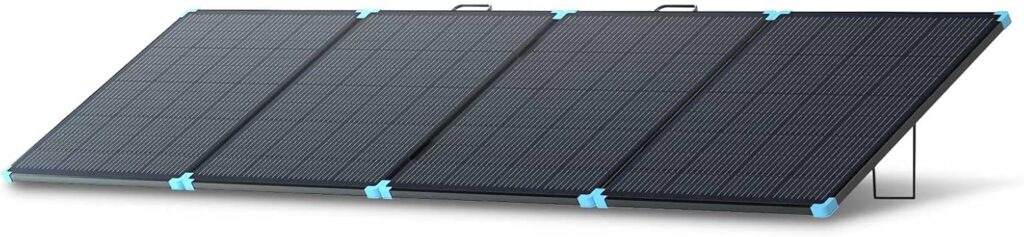
What is a Solar Suitcase Anyway?
If you’re new to the portable solar game, the “suitcase” design is pretty clever. It’s essentially multiple solar panels folded up and housed in a protective case with a handle. Think of it like a brief case…but for sunshine! This makes it way easier to transport and protect the panels than dealing with individual, rigid panels. The Renogy 400W version unfolds to reveal four 100W panels connected together, ready to plug into your power station or other charging setup.
First Impressions & Build Quality
Out of the box, I was pleasantly surprised. It’s not light (around 26.4lbs), but it felt pretty solid. The fabric case feels durable, and the hinges seem are well-made. (We did suffer a failure on one of four panels.) The panels themselves aren’t the absolute highest efficiency on the market, but they’re a respectable monocrystalline silicon, which is what you want for good performance in varying light conditions. The included carrying handle is comfortable enough, and the corner protectors on the case are a nice touch.
I immediately appreciated the integrated kickstands. They’re adjustable, letting you angle the panels to maximize sunlight capture, which is crucial. There’s also a small zippered pocket on the front – perfect for storing cables and connectors. It’s not a huge detail, but it shows Renogy thought about usability.
Setting it Up: Ridiculously Easy
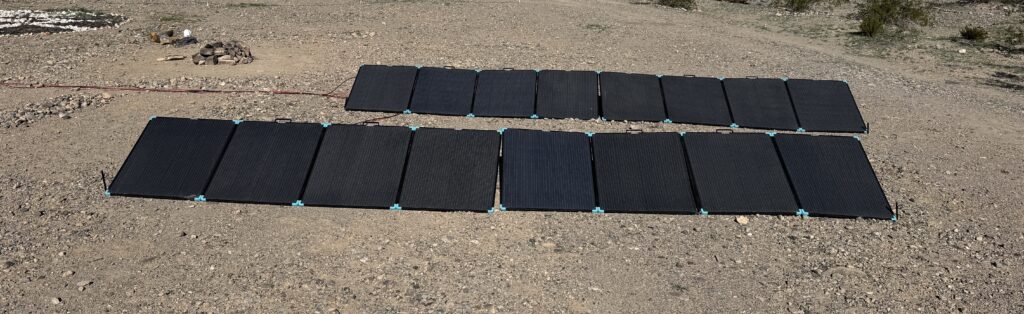
Seriously, this is one of the biggest selling points. Unzip the case, unfold the panels (it’s pretty intuitive), prop up the kickstands, and plug in your charge controller/power station. That’s it. I was powering up my Bluetti AC500 in under a minute.
The panels come with MC4 connectors, which are the standard for solar. The leads are at best 18 inches – you’ll need an extension cable depending on how you intend to deploy. Ours are ground-deployed to allow flexibility, particularly if our camper is in the shade.
Performance: Does it Deliver the Watts?
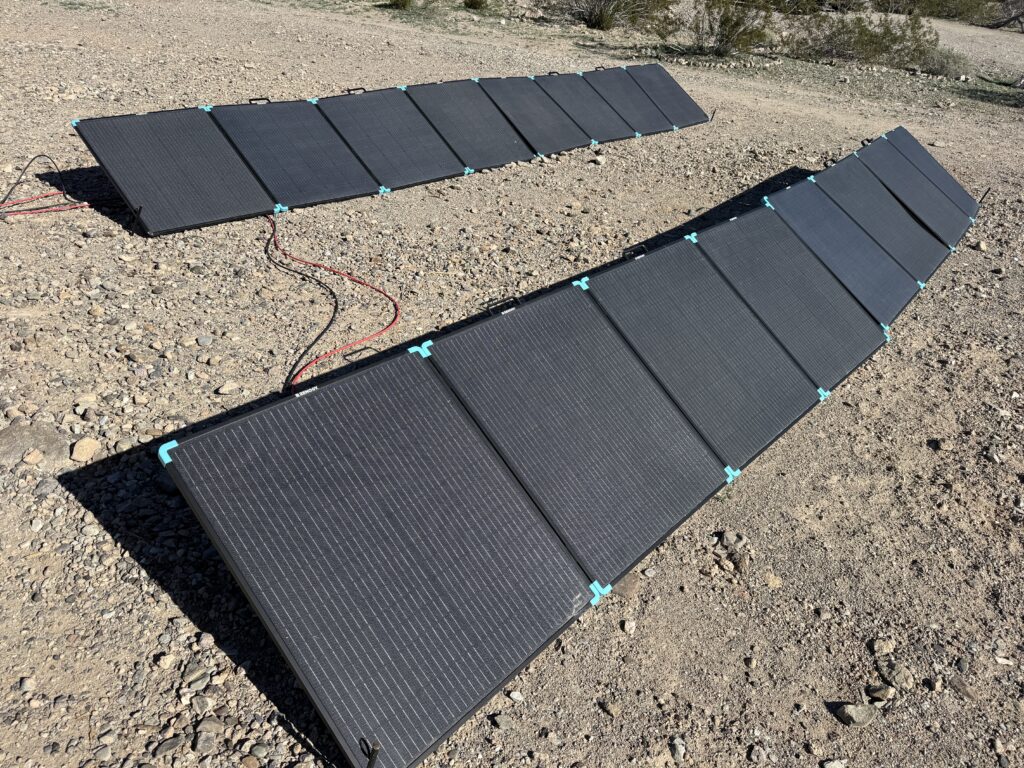
This is where it gets real. Renogy advertises 400W peak power. I purchased four of these units for a combined total of 1.6kW of maximum power under the most ideal of conditions. I expected perhaps 50% of advertised power and have been thrilled to regularly extract 1.4kW peak power. That’s a little below the advertised peak, but pretty typical for real-world performance. Remember, advertised wattage is usually achieved under ideal lab conditions.
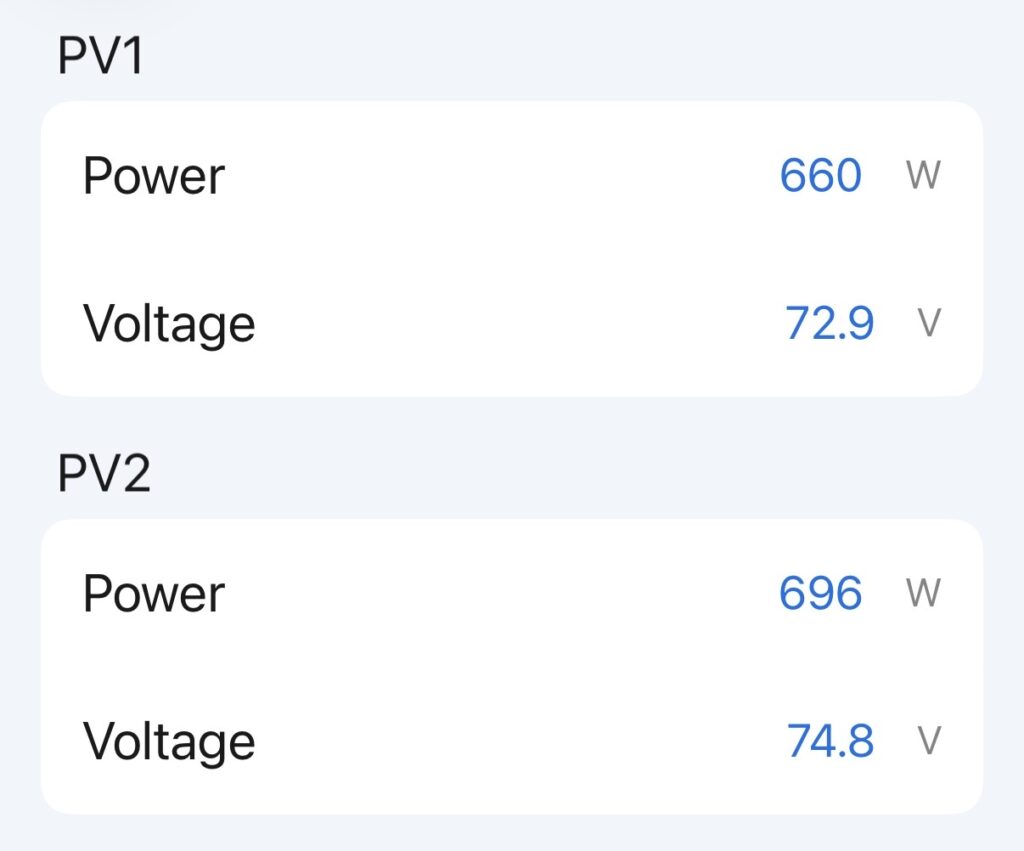
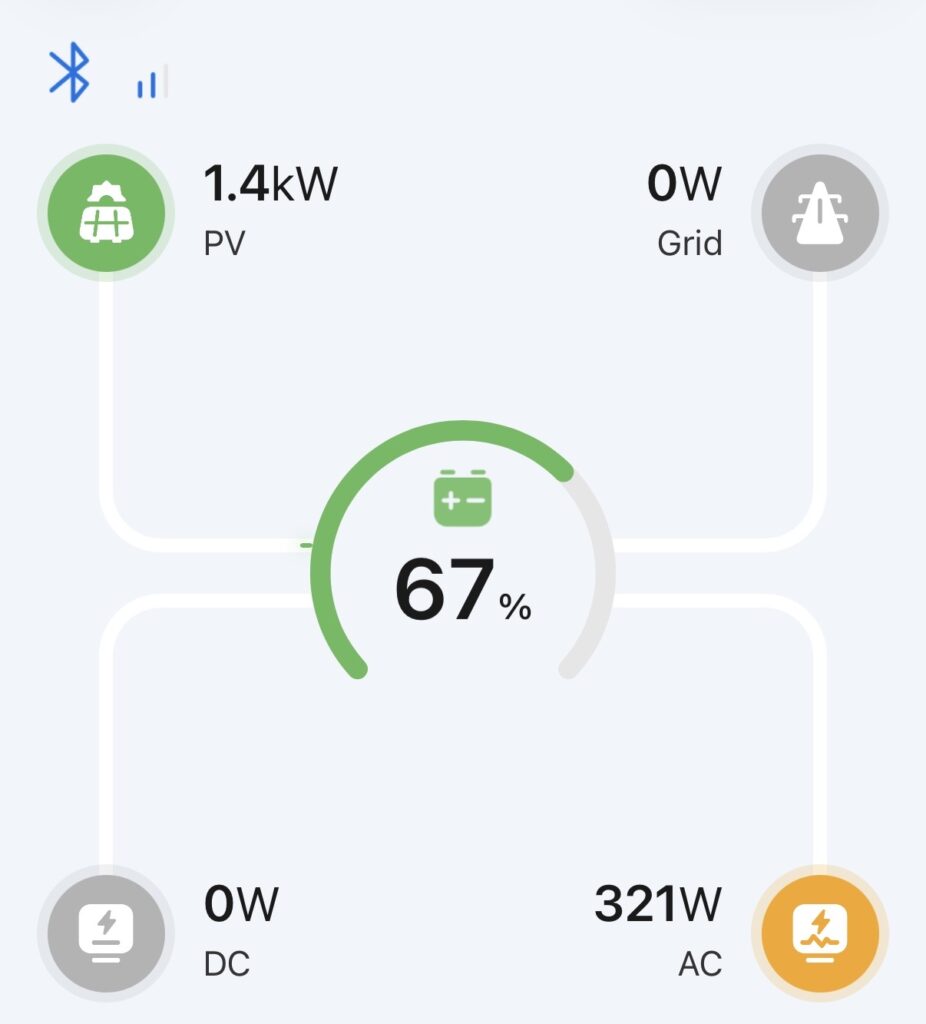
What impressed me more was how well it performed in less-than-ideal conditions. Even on partly cloudy days, I was still able to generate a decent amount of power – enough to keep my phone, camera batteries, and small devices charged. The monocrystalline panels handled shaded areas better than I expected. I ran some tests with partial shade on one panel, and the others continued to generate a significant amount of power, which is a big plus.
I paired it with my Bluetti AC500 and was able to fully charge it in about 6-7 hours of good sunlight. Our panels easily kept up with our day-to-day operations in a 50-AMP travel trailer.
What I Loved:
- Portability: The suitcase design is a game-changer for transport and storage.
- Ease of Use: Seriously, anyone can set this up in minutes.
- Solid Build Quality: Feels durable and well-made.
- Good Performance in Sub-Optimal Conditions: It doesn’t completely shut down when clouds roll in.
- Included Adapter: Saves you money on an initial purchase.
What Could Be Improved:
- Weight: It’s not featherlight. If you’re backpacking, this isn’t the panel for you.
- MC4 to DC Cable Not Included: A common omission, but still an extra expense.
- Kickstand Stability: In windy conditions, the kickstands can feel a little flimsy. Using weights to secure it is helpful.
Who is this for?
The Renogy 400W Solar Suitcase is perfect for:
- Campers and Overlanders: Wanting to power devices and stay off-grid.
- Emergency Preparedness: Having a reliable power source during outages.
- Van Life/RV Enthusiasts: Supplementing their existing power system.
- Anyone wanting a portable, easy-to-use solar solution.
Final Verdict: Highly Recommended
Overall, I’m very happy with the Renogy 400W Solar Suitcase. It’s a well-built, easy-to-use, and surprisingly capable portable solar solution. While it’s not the cheapest option out there, the convenience and quality justify the price, in my opinion. If you’re looking to harness the power of the sun and gain a little more independence, I highly recommend giving this one a look.
| Scoring/Ratings | $499 |
| Innovation (1-5): Uniqueness and creativity of the experience or product. | 5 |
| User Experience (1-5): Ease of use, enjoyment, and customer support. | 5 |
| Results (1-5): Effectiveness and satisfaction with the outcome. | 4 |
| Recommendability (1-5): Likelihood of recommending the experience or product to others. | 5 |
| Total Score | 19 |